October 1, 2026
Real ChatGPT meal planning prompts people use in 2026, explained simply. Learn what works, what doesn’t, and how to get better weekly plans.
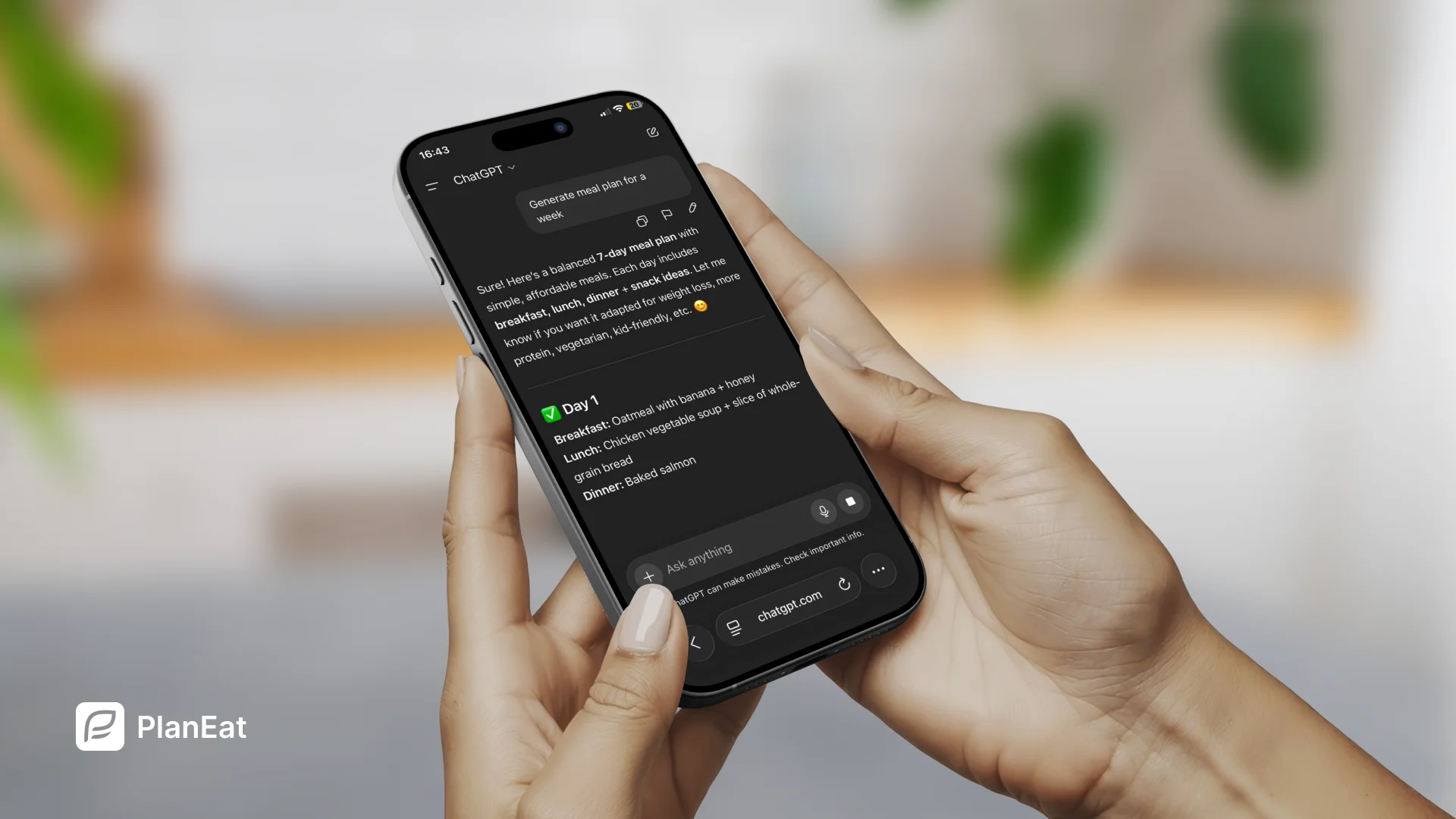
TL;DR: In 2026, many people still use ChatGPT for meal planning, but results depend heavily on the prompts they copy and adapt. This article explains which real prompts people use online, why they work, and where their limits are.
ChatGPT is often used as a quick way to brainstorm meals, plan a week of eating, or turn ideas into a grocery list. Most people rely on prompts shared in blogs, Reddit threads, and prompt libraries rather than writing their own from scratch.
If you want a more structured approach without rewriting prompts each week, PlanEat AI creates a weekly meal plan and a grouped grocery list based on your goals, dislikes, and available cooking time. This turns planning into a repeatable process instead of a one‑off experiment.
The following prompts are widely shared online in meal planning communities and articles. They work because they give ChatGPT clear structure and constraints.
Create a 7‑day meal plan for one adult with breakfast, lunch, and dinner. Focus on whole foods, lean protein, vegetables, and simple carbs like rice and potatoes. Keep meals practical and easy to repeat.
Plan five days of dinners for two people. After listing the meals, create a grocery list grouped by store sections such as produce, protein, and pantry items.
I have these ingredients in my kitchen: chicken, eggs, rice, frozen vegetables, and olive oil. Suggest several meals I can cook over the next few days using mostly these items.
Create a meal prep plan where I cook twice this week and use leftovers for other meals. Focus on recipes that reheat well and share ingredients.
Create a five‑day dinner plan for a family with simple meals that adults and kids can both eat. Dinners should take under 30 minutes and allow small customizations.
This style of prompting aligns with the same structure explained in Meal Planning Basics: How to Start (Beginner Guide).
These prompts succeed because they limit choices. They define the number of days, meals, people, and constraints. Vague prompts like “give me healthy meals” often lead to generic answers.
A similar principle is discussed in Using ChatGPT for Meal Planning: Best Prompts, where small prompt details dramatically change the output quality.
ChatGPT works well for inspiration, but it has limits.
This is why many people eventually move toward structured planning systems instead of one‑time prompts.
With PlanEat AI, you can reuse weekly plans, swap meals easily, and keep protein and fiber consistent without rewriting prompts. This helps turn planning into a habit rather than a repeated setup task.
They are best treated as educational tools. ChatGPT can suggest meals, but it should not replace professional nutrition guidance.
No. These prompts work as templates. Small adjustments for preferences and schedule usually improve results.
It can help with ideas, but it lacks memory and structure across weeks. Many people use it alongside other planning tools.
Educational content only, not medical advice.
Real ChatGPT meal planning prompts people use in 2026, explained simply. Learn what works, what doesn’t, and how to get better weekly plans.