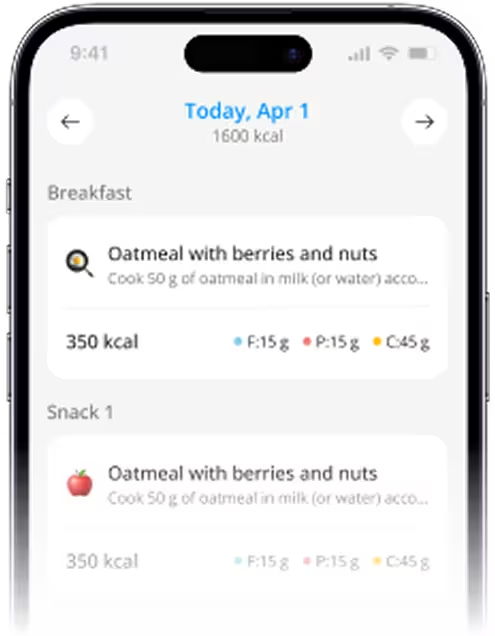
Calorie Counting vs AI Meal Planner (Which to Choose?)
.webp)
TL;DR: Calorie counting and AI meal planners solve different problems. Counting calories gives you precise numbers and tight control, but it costs time and attention every day. An AI meal planner builds weekly menus and grocery lists from your goals and preferences so you focus on following a realistic plan instead of logging every bite. This guide explains what each method actually does, when it helps, when it backfires, and how to decide which approach fits your life right now.
What calorie counting and AI meal planners actually do
Before you pick a side, it helps to understand what each tool is designed to do.
Calorie counting
- You log foods and drinks, often with a barcode scanner or search.
- The app estimates calories and usually protein, carbs, and fat.
- You compare your intake to daily targets and adjust portions over time.
AI meal planner
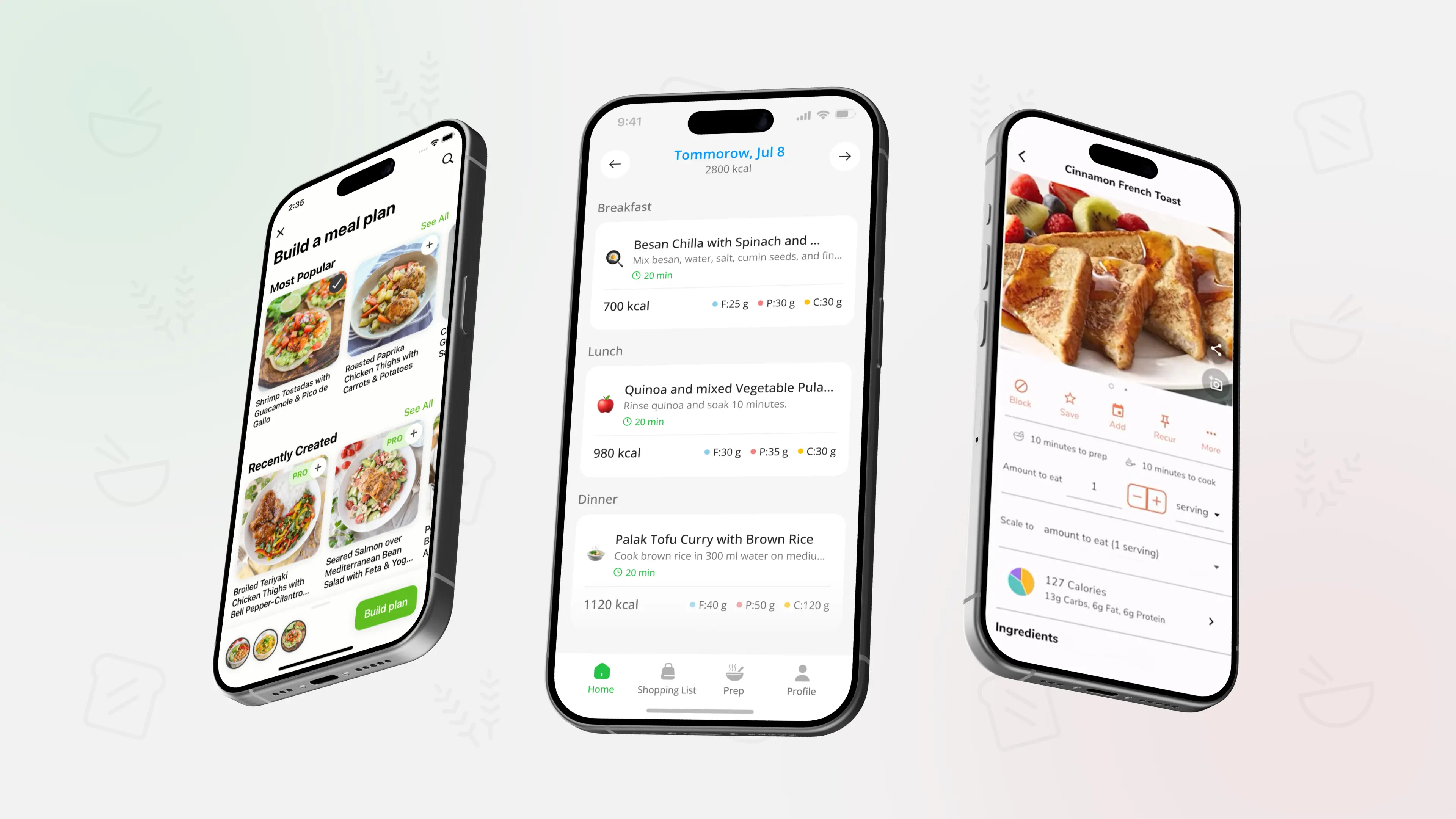
- You answer a few questions about goals, dislikes, time to cook, and meals per day.
- The planner generates a weekly menu that fits those inputs.
- You get a grocery list grouped by store section so shopping is faster.
- You follow the plan and adjust meals instead of logging in detail.
Both tools can support weight, health, or energy goals, but they ask for different types of effort. If you want a broader view of how AI planning works under the hood, you can read How AI Helps Meal Planning (Personalized Menus & Lists) as a deeper explanation of how menus and grocery lists are generated from your inputs.
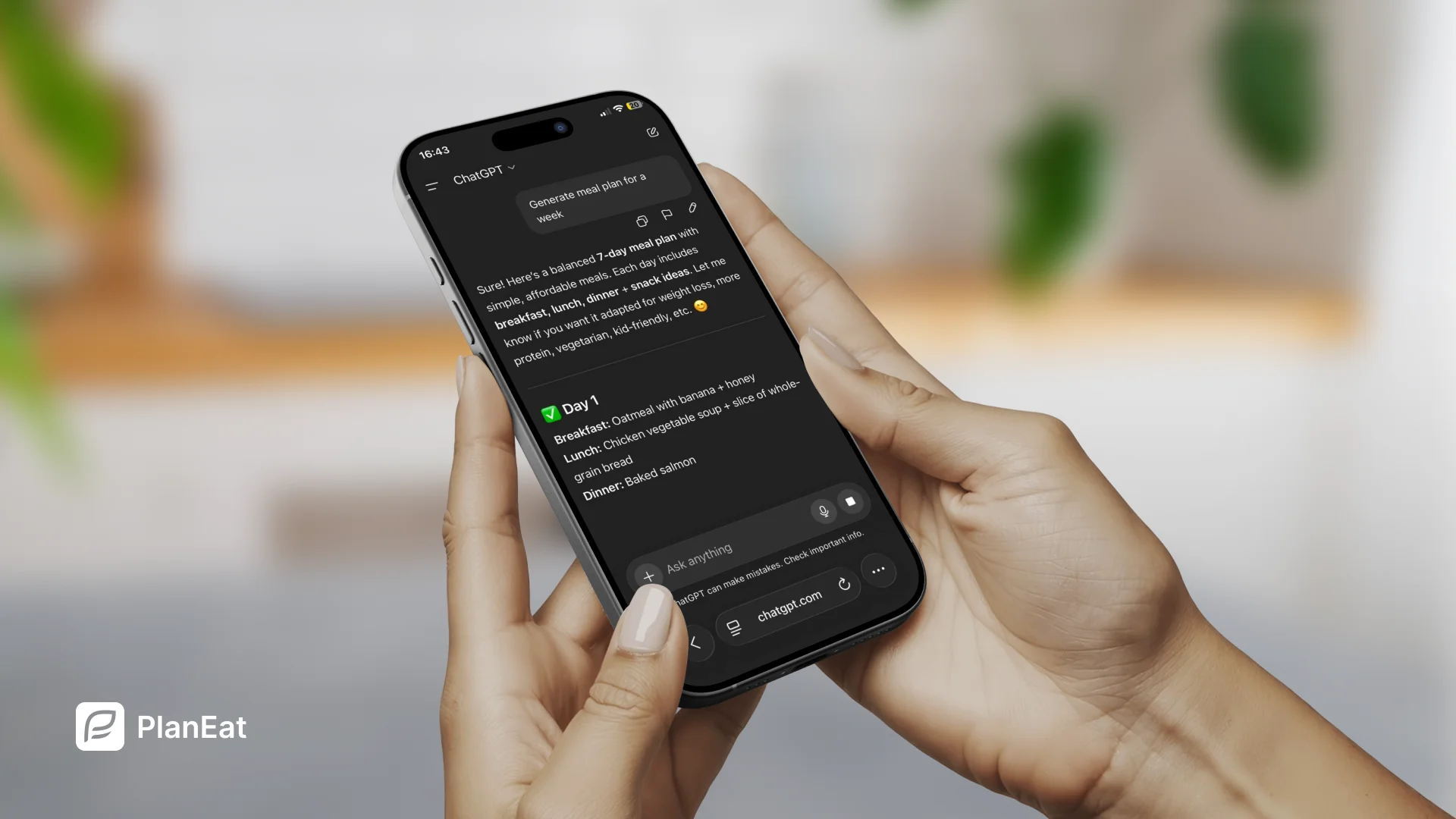
If you prefer planning once rather than logging several times a day, you can use PlanEat AI as your AI meal planner. It creates a personalized weekly menu and a grouped grocery list based on your goals, dislikes, and cooking time so you spend most of your effort cooking from the plan, not entering data.
When calorie counting works best
Calorie counting can be a powerful tool when used in a focused, time limited way.
It tends to work well if you:
- Want to learn your usual intake. Logging for a few weeks can show how much you eat on typical days compared to what you thought.
- Have a specific numeric target. For example, you are working with a clinician or coach who recommends a calorie or macro range.
- Enjoy numbers and details. Some people like seeing charts and daily breakdowns and find them motivating.
- Are willing to trade time and attention for precision.
Situations where calorie counting is helpful:
- You want to check whether your protein, carb, and fat intake is roughly in line with general guidelines. For a simple overview of those ranges, you can read Macros for Beginners: Protein, Carbs, Fat (How Much?).
- You have a short term goal, such as understanding portions or testing a specific calorie range for a few weeks.
Where calorie counting can backfire:
- It can increase stress or guilt if you feel pressured to hit exact numbers every day.
- It can push you toward choosing foods mainly for numbers instead of how you feel.
- Logging every bite can be tiring, especially for social events, home cooked meals without labels, or travel.
A realistic way to use calorie counting is as a learning phase, not a forever habit. Once you have a sense of your ranges, you can shift focus to planning balanced meals and checking in with numbers less often.
When an AI meal planner is the better fit
AI meal planners aim to reduce decision fatigue and make it easier to follow a realistic structure week after week.
They tend to work well if you:
- Are tired of deciding what to cook every evening.
- Want to shop once or twice a week with a clear plan.
- Prefer fewer decisions and more structure.
- Care more about patterns over time than about logging every detail.
What an AI meal planner like PlanEat AI typically does in practice:
- Asks about your goals, eating style, dislikes, time to cook, and how many meals per day you want planned.
- Generates a weekly plan with recipes that fit those settings.
- Builds a grocery list grouped by sections such as produce, pantry, and dairy so you move through the store efficiently.
- Lets you swap meals, repeat weeks that worked, and keep a consistent pattern without starting from zero.
If you want to see how AI planners compare across iOS apps, including features like personalization and grocery lists, you can look at Best AI Meal Planner Apps for iPhone (iOS, US 2025) as a companion overview.
Where an AI meal planner might not be enough on its own:
- You need precise calorie or macro targets for medical or performance reasons.
- You do not cook often and rely mostly on restaurants or ready meals.
- You enjoy tracking and want more daily feedback.
For many people, though, a weekly plan that is realistic for their schedule already solves the biggest pain point: not knowing what to cook and buy.
How to decide which approach to start with
It can help to treat this as a decision between two starting tools, not two opposing camps.
Ask yourself a few questions:
- Do I like numbers and daily logging, or do I find them draining.
- Is my main problem not knowing what to eat, or not knowing how much.
- Do I have time and energy right now for detailed tracking, or do I need something simpler.
If your answers sound like:
- "I want to know how many calories and macros I usually eat" and "I do not mind logging for a while"
Then starting with calorie counting for a defined period can make sense. - "I am tired of deciding what to cook" and "I want a plan I can mostly follow on autopilot"
Then starting with an AI meal planner is often a better fit.
You do not have to guess forever. You can also experiment. For a week or two, try one approach and note how it affects your stress, time, and eating. Then try the other.
If you want to zoom out and compare these styles in more general terms, you can also read Calorie Counting vs Meal Planning: What Works Better which looks at the same question from a pattern and mindset perspective.
How to combine calorie counting and an AI meal planner
You do not have to choose one tool for life. Many people use both at different times or in different ways.
A simple combined strategy:
- Use an AI meal planner such as PlanEat AI as your base. Let it generate weekly menus around your goals and time limits and follow that structure most weeks.
- Use calorie counting occasionally as a spot check if you want more detail. For example, log a few full days each month to see whether your intake is roughly where you expect.
Benefits of this hybrid approach:
- You keep daily decisions small because the planner handles structure and shopping.
- You still have access to numbers when you want them without logging forever.
- You can adjust portions or recipes in your plan if spot checks show your intake is very different from what you expected.
Once you find a few weekly patterns that work in PlanEat AI, you can save them as reusable plans and simply adjust details when your schedule changes. That way, your main structure and grouped grocery list stay stable while you decide how often, if at all, you want to add short phases of calorie counting on top.
Example: two different weeks using each method
It can be easier to see the difference between calorie counting and AI planning in a concrete example.
Week with calorie counting as the main tool
- You eat close to your usual meals but weigh or estimate portions and log everything.
- At the end of the week, you learn that your intake is higher or lower than expected.
- You adjust future portions or meal choices based on the numbers.
This is useful when your main question is "How much am I actually eating."
Week with an AI meal planner as the main tool
- You set your goals, preferences, time to cook, and meals per day in an app like PlanEat AI.
- It generates a weekly menu with breakfast, lunch, dinner, and snacks that fit those inputs.
- You shop once with the grouped grocery list and follow the plan, swapping meals when needed.
This is useful when your main question is "What should I eat this week that fits my routine."
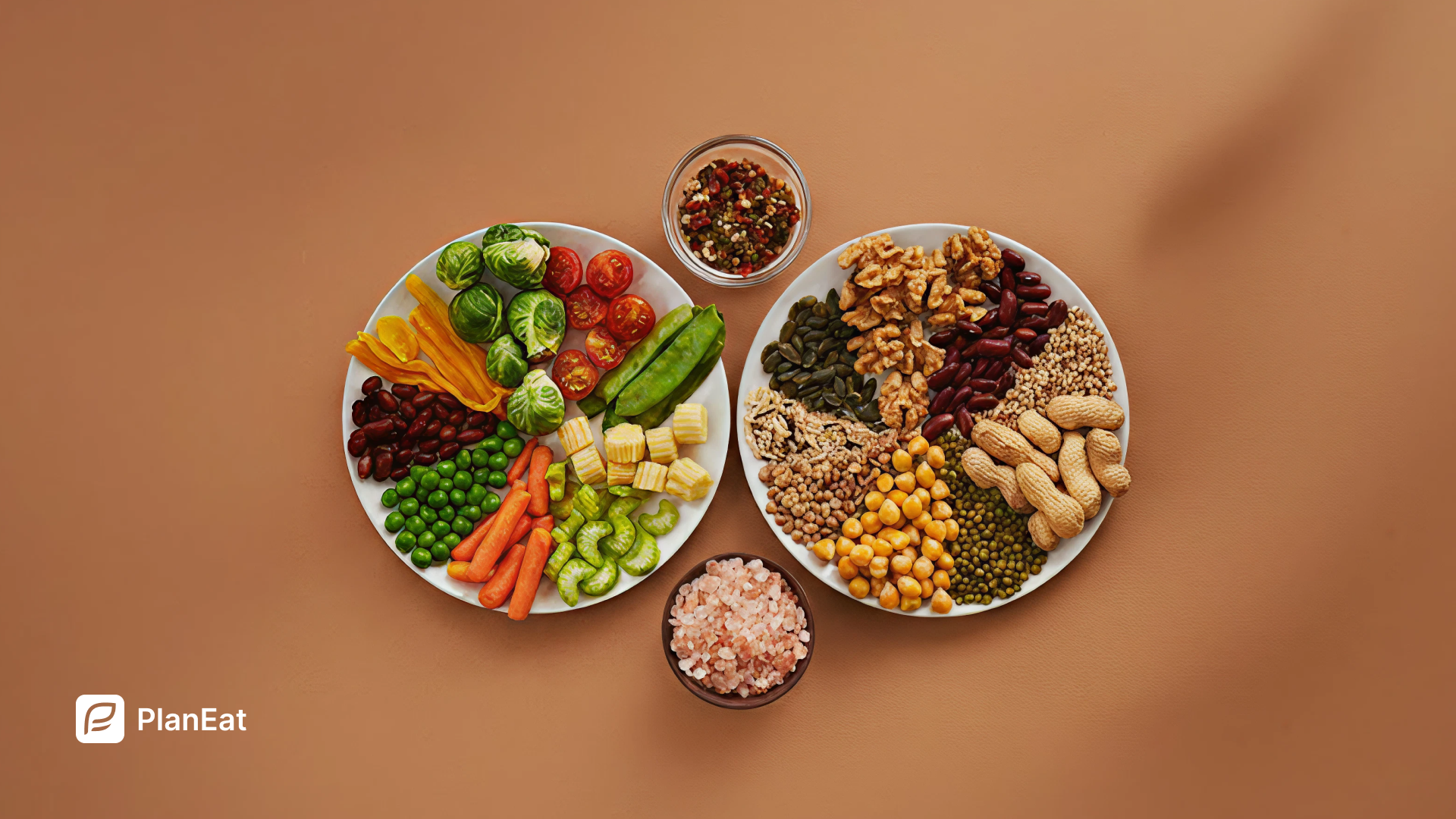
Over time, you might use a few weeks of calorie counting to set expectations, then rely on AI planning and simple visual guides for most of the year. For a basic visual reminder of what balanced meals look like inside those plans, you can use Healthy Eating Basics: Build a Balanced Plate as a reference.
FAQ:
Is calorie counting better than using an AI meal planner for weight loss
Not for everyone. Calorie counting can give more precise numbers, which helps some people, especially in the short term. AI meal planners can make it easier to eat balanced meals consistently without constant logging. The better option is the one you can follow for months without burning out.
Can I lose weight without counting calories if I use an AI meal planner
For many people, yes. A realistic weekly plan built around balanced meals, enough protein, and mostly unprocessed foods can support weight goals even without logging every calorie. An AI planner helps by reducing last minute decisions and reliance on takeout or random snacks.
Should I ever use both approaches at the same time
You can. One common pattern is to use an AI meal planner for structure and then log those planned meals in a tracker for a short period. That gives you both numbers and a plan, but it is usually better to keep this combined phase time limited to avoid burnout.
What if calorie counting makes me anxious
If logging and checking numbers makes you feel guilty, stressed, or out of control, that is a sign to step back. You might do better with a planning first approach, focusing on simple patterns and visual guides instead of detailed tracking. If anxiety is strong or persistent, it is important to bring this up with a health professional.
Are AI meal planners accurate enough for medical diets
AI planners are not a replacement for medical advice. They can help with structure and ideas, but they do not know your full medical history. If you have conditions that require strict control of nutrients, allergies, or interactions, you should work with a clinician and follow their guidance.
Educational content only - not medical advice.
Choosing between numbers and structure for your meals
Calorie counting and AI meal planners both work, but they demand different kinds of effort. If you want precision and do not mind daily logging, counting can teach you a lot in a short time. If you prefer fewer decisions and a clear weekly plan, an AI meal planner may fit better, with the option to add short bursts of tracking only when you need extra detail.

.webp)
.webp)
.webp)
%20Simple%20Staples%20(2026).webp)
.webp)


.webp)
.webp)
.webp)
_.webp)
_.webp)


.webp)
_webp.webp)
_.webp)
_.webp)
_webp.webp)
.webp)
.webp)
_%20What%20to%20Buy%20When%20(2026)_.webp)
_.webp)
webp.webp)
_.webp)
.webp)
.webp)
.webp)
.webp)
.webp)
.webp)

.webp)
.webp)
.webp)
.webp)

.webp)
.webp)

.webp)
.webp)
%20%2B%207%E2%80%91Day%20Menu.webp)
.webp)

.webp)
.webp)




.webp)
.webp)
.webp)
%20iOS%20Focus.webp)
.webp)
.webp)
.webp)
.webp)
.webp)
.webp)
.webp)
.webp)
.webp)
..webp)