

April 30, 2026
Add more fiber fast with 12 easy methods using oats, beans, berries, and simple swaps. Includes a weekly structure and quick tips to avoid bloating.
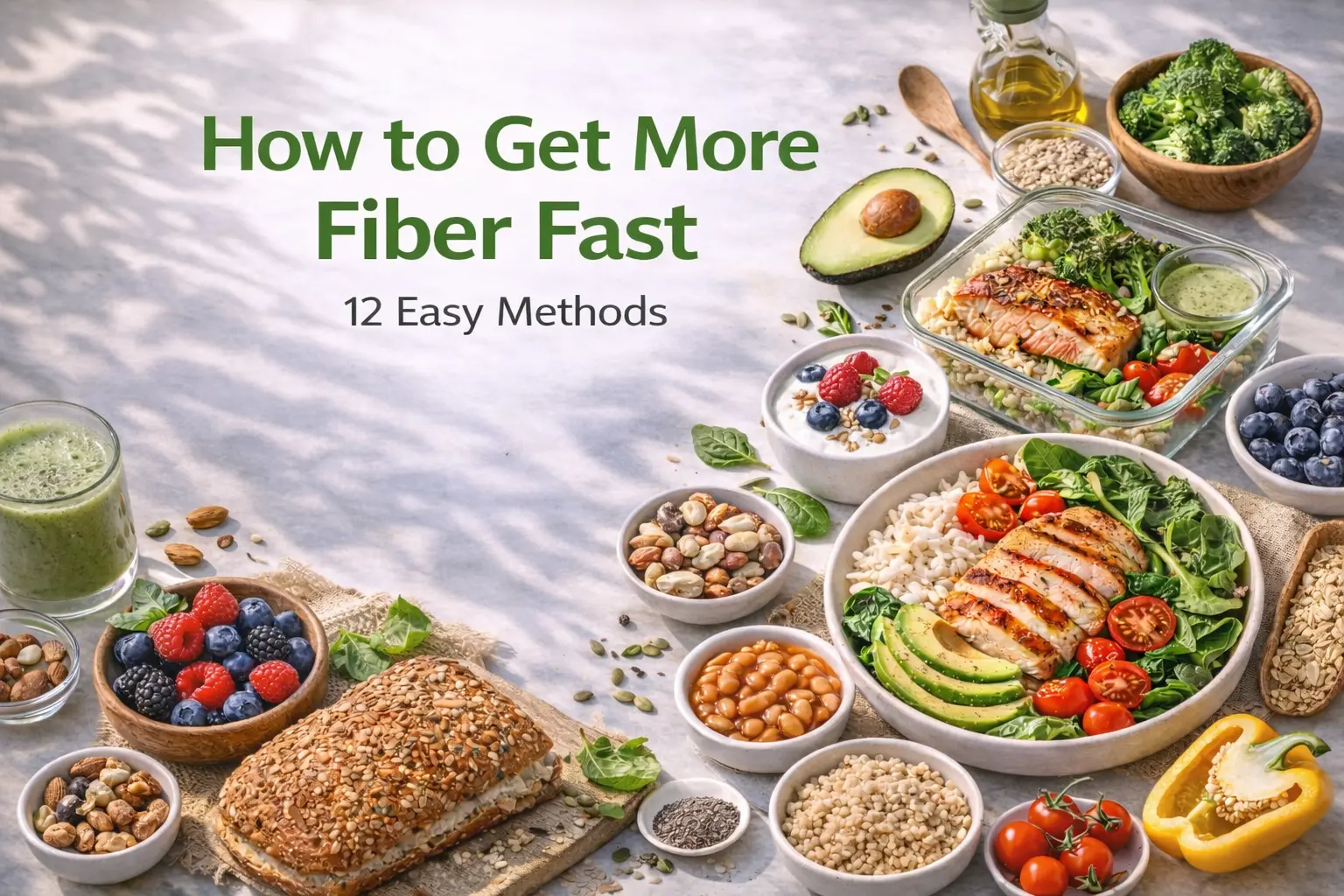
TL;DR: If you want more fiber without overhauling your diet, focus on small, repeatable upgrades: add one fiber anchor to breakfast, one to lunch, and one to snacks. These 12 methods are practical, US-grocery friendly, and designed to work even on busy weeks.
Most people associate fiber with salads, but salads are not the easiest way to hit a consistent fiber level. Fiber comes from a lot of foods you already buy, like beans, oats, berries, whole grains, and even frozen vegetables.
The real issue is structure. If your meals are built around protein and refined carbs, fiber gets pushed to the side. The fastest fix is to add fiber in small places you repeat every day, not to chase one perfect high-fiber meal.
If you want this to feel automatic, PlanEat AI can generate a weekly meal plan and a grouped grocery list personalized to your goals, dislikes, cooking time, and basic restrictions, with simple swaps when a meal does not fit your week.
You do not need to do all 12. Pick 3 to start, then build from there.
1. Start breakfast with oats at least 3 days a week Overnight oats or warm oatmeal is one of the simplest fiber anchors. It is cheap, fast, and easy to repeat. Add berries and chia for an even bigger boost.
2. Add 1 tbsp chia or ground flax to one thing per day Chia and ground flax work well in yogurt, oatmeal, smoothies, and even pancake batter. This is a low-effort upgrade because it does not change your meal, it just improves it.
3. Choose berries as your default fruit Berries are an easy fiber win and they pair well with yogurt, oatmeal, and snacks. Frozen berries are a great option because they are available year-round.
4. Make beans your “default add-on” Canned beans make fiber easy. Add black beans to bowls, chickpeas to salads, or white beans to soups. If you do this three times a week, your fiber intake changes fast.
5. Swap white bread for whole grain bread most days This is not about perfection. Just make whole grain your default at home. If you eat sandwiches, this one change can add meaningful fiber over a week.
6. Use a “double veggie” rule at dinnerIf dinner includes one vegetable, add a second one that is low effort, like a bagged salad, frozen broccoli, or pre-cut veggies. This helps fiber without adding complicated cooking.
7. Keep a frozen veggie you actually like Frozen broccoli, mixed vegetables, cauliflower rice, and spinach are easy to add to stir-fries, pasta, rice bowls, and eggs. The best frozen veggie is the one you will use.
8. Choose one high-fiber snack patternIf snacks are mostly crackers and sweets, fiber will stay low. A better pattern is fruit plus nuts, yogurt plus berries, or hummus plus veggies. Keep it boring and repeat it.
9. Add hummus to your week Hummus is an easy way to add fiber and it makes veggies more likely to happen. Use it as a snack, a sandwich spread, or a bowl topping.
11. Use popcorn as your default crunchy snack Popcorn can be a better fiber-friendly crunch option than chips when portioned reasonably. Pair it with a protein option if you need more staying power.
12. Increase fiber slowly and drink more waterIf you jump too fast, you may feel bloated. Add fiber in steps and increase fluids so your body adjusts comfortably.
If you want a simple way to structure meals so fiber shows up naturally, Healthy Eating Basics: Build a Balanced Plate is a good baseline.
If you want this to work fast, stop thinking in daily perfection. Think in weekly repetition.
Try this simple weekly goal:
This is realistic for most people and it builds fiber without making meals complicated.
If you find a set of fiber habits that work, PlanEat AI helps you save a plan as reusable and swap meals quickly while keeping a steady base of repeatable protein and fiber across the week.
Increase fiber gradually instead of all at once, and drink more water. Start with one change, like oats at breakfast or beans at lunch, for a few days before adding another.
Oats, canned beans, lentils, berries, whole grain bread, frozen vegetables, hummus, and chia or flax are some of the easiest options. They work in simple meals and do not require special cooking.
They work best together. Protein helps meals feel satisfying, and fiber helps you stay full and keep digestion steady. A good plan includes both across the day.
A bowl made from rice or quinoa, canned beans, chopped veggies, and a sauce like salsa or tahini is one of the easiest. It is fast, repeatable, and easy to adjust.
Educational content only, not medical advice.
Add more fiber fast with 12 easy methods using oats, beans, berries, and simple swaps. Includes a weekly structure and quick tips to avoid bloating.

