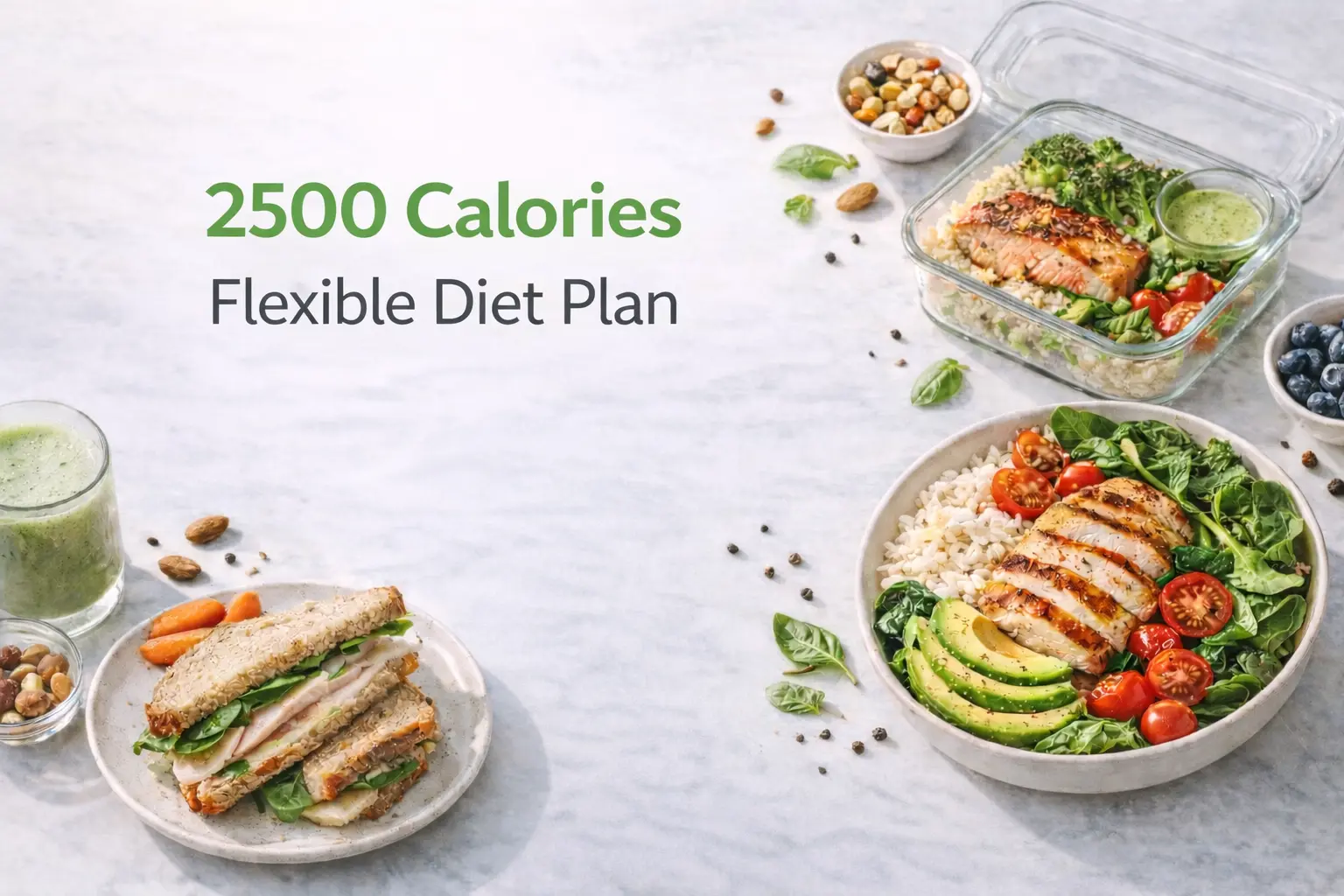
TL;DR: A 2500-calorie plan is easiest to sustain when it is built around repeatable meal templates, not perfect tracking. This flexible structure gives you a realistic 7-day template, simple swap rules, and grocery staples so you can stay consistent without macro math.

What “flexible” means at 2500 calories

A flexible plan means you follow a repeatable frame and swap meals inside it. You aim for a daily range like 2450 to 2600 using consistent meals, not perfect tracking.

At 2500, the biggest mistake is treating the extra calories as “snack space.” That often leads to a day full of small bites and a dinner that still feels unsatisfying. A better approach is three main meals, one planned snack, and a simple rule: every main meal includes protein and fiber.

If you want a structure like this without planning from scratch, PlanEat AI can generate a weekly meal plan and a grouped grocery list personalized to your goals, dislikes, cooking time, and basic restrictions, with simple meal swaps when a meal does not fit your week.

The structure that keeps you full without tracking

Instead of tracking every ingredient, use meal buckets and a few repeatable rules. This keeps the plan practical and helps you land near 2500 most days.

A practical day split:

  • Breakfast: 550 to 700 calories
  • Lunch: 700 to 850 calories
  • Dinner: 850 to 1050 calories
  • Snack: 250 to 400 calories

Non-negotiables for consistency:

  • Protein at every main meal (Greek yogurt, eggs, tofu, chicken, fish, beans).
  • Fiber most days (berries, vegetables, beans, oats, whole grains).
  • One planned snack so you do not drift into grazing.

If you prefer portion shortcuts instead of numbers, Portion Control Made Easy (No Scale Needed) can help you stay consistent.

7-day 2500-calorie flexible plan template

This is a realistic template you can repeat and swap. Portions are in US units and daily totals are approximate.

Day 1

  • Breakfast: Greek yogurt bowl with berries, 1 tbsp chia, and 1 cup granola
  • Lunch: big salad with chicken or chickpeas, veggies, vinaigrette, plus whole grain toast and a side of fruit
  • Snack: apple with 2 tbsp peanut butter plus a small handful of nuts
  • Dinner: tofu or chicken stir-fry with mixed vegetables over 2 cups cooked rice

Day 2

  • Breakfast: oatmeal with milk, berries, and 2 tbsp peanut butter, plus a yogurt
  • Lunch: lentil soup plus whole grain toast, side salad, and olive oil dressing
  • Snack: hummus with crackers and veggies, plus fruit
  • Dinner: burrito bowl with black beans, rice, salsa, guacamole, extra veggies, and an extra tortilla if needed

Day 3

  • Breakfast: egg scramble with spinach, 2 slices whole grain toast, plus fruit
  • Lunch: tuna or chickpea salad wrap with veggies, plus yogurt and a piece of fruit
  • Snack: trail mix portion
  • Dinner: sheet-pan vegetables with tofu or salmon, plus potatoes and a side salad

Day 4

  • Breakfast: smoothie with Greek yogurt, berries, spinach, oats, and peanut butter
  • Lunch: quinoa bowl with roasted vegetables, feta or tofu, and olive oil dressing
  • Snack: cottage cheese with cucumber plus whole grain crackers
  • Dinner: vegetarian chili with beans, topped with avocado, plus a side of rice

Day 5

  • Breakfast: cottage cheese bowl with berries and 1 tbsp ground flax, plus toast and fruit
  • Lunch: Mediterranean plate: hummus, cucumber, tomatoes, pita, and a protein add-on
  • Snack: popcorn plus a protein option like yogurt
  • Dinner: pasta with marinara, extra vegetables, and a side salad with olive oil

Day 6

  • Breakfast: overnight oats with milk, chia, berries, and nuts
  • Lunch: protein-forward salad: eggs or tofu plus beans and greens, plus whole grain bread
  • Snack: hummus with whole grain crackers
  • Dinner: burger bowl or tofu bowl, plus oven potatoes and a big veggie side

Day 7

  • Breakfast: avocado toast with a side of Greek yogurt and fruit
  • Lunch: soup and salad combo with a protein add-on, plus a carb side like bread
  • Snack: banana plus 2 tbsp peanut butter
  • Dinner: curry with tofu and 2 cups cooked rice

If you want more ideas for building meals that stay balanced without tracking, Healthy Eating Basics: Build a Balanced Plate is a good reference.

If you find a week that works, PlanEat AI helps you save the plan as reusable and swap meals quickly while keeping a steady base of repeatable protein and fiber across the week.

Swap rules that keep you in the 2500 range

A flexible plan only works if swaps are simple. Use these rules to stay close to your target without doing math.

Easy swap rules:

  • Swap breakfast with breakfast, lunch with lunch, dinner with dinner.
  • Keep the same protein anchor, then change the carb or vegetables.
  • Add fats intentionally. If you add extra avocado or nuts, reduce something else slightly.
  • If you are too hungry, add protein or vegetables first, then adjust carbs.

Examples of clean swaps:

  • Yogurt bowl ↔ eggs and toast
  • Salad bowl ↔ soup and sandwich half
  • Stir-fry ↔ sheet-pan dinner

FAQ

Is 2500 calories good for muscle gain?

It can be, depending on your size, training, and weekly consistency. The main lever is keeping protein anchored at breakfast, lunch, and dinner, then using carbs and healthy fats to cover energy needs.

How do I avoid turning a 2500-calorie plan into snack meals?

Plan three real meals first, then add one snack on purpose. Build snacks around protein and fiber, like yogurt and fruit, or hummus and whole grain crackers, instead of grazing on random ultra-processed snacks.

Can I do 2500 calories without tracking?

Yes, if you use repeatable meals and consistent portions. Use the same breakfast and lunch patterns, then swap dinners within the same template. Big day-to-day changes make it harder to stay near 2500.

What if I feel low energy or keep getting hungry at night?

Check meal timing and whether breakfast includes protein and carbs. Many people under-eat early, then try to catch up late. If you are training hard, you may also need more carbs around workouts.

Educational content only, not medical advice.

The flexible rule that makes 2500 work

A 2500-calorie plan feels easy when you keep meals protein-first and high in fiber, then use carbs and healthy fats to scale portions up. Use a repeatable weekly template, swap meals inside the same structure, and treat 2500 as a range, not a perfect number.

Writen by
Diana Torianyk
Fitness & Wellness Coach

Read more

Ready to stop guessing
and start eating better?

Backed by real intelligence. Loved by real people
Claim Your
3-Day Free Trial
Claim My Free Trial